

Best SEO Strategies for Small Businesses in 2026
April 21, 2026
Why Netflix Is a Dynamic Website in 2026 (Simple Guide)
April 21, 2026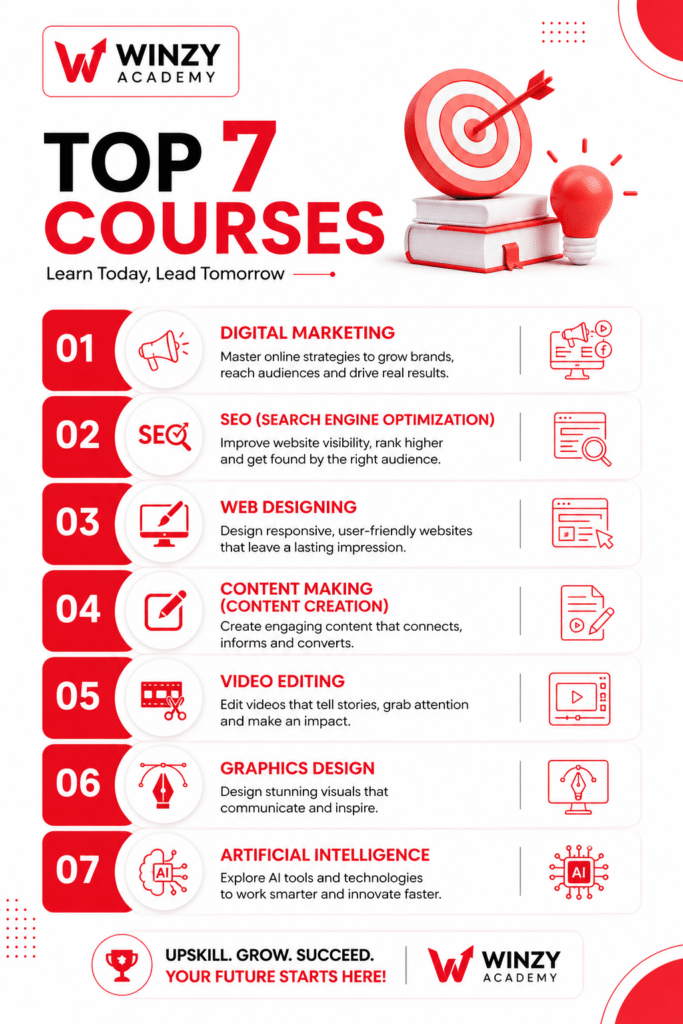
What are top 7 courses
1.Digital marketing:
Uses of Digital Marketing:
“If you are looking for a career change, you might wonder what are top 7 courses to pick in 2026.”
- Brand Awareness: Builds visibility and recognition through search engines, social media, and online ads.
- Customer Engagement: Creates two-way communication via interactive posts, blogs, and personalized campaigns.
- Lead Generation & Sales: Attracts potential customers through SEO, paid ads, and email marketing, then converts them into buyers.
- Cost-Effective Promotion: Offers cheaper alternatives to traditional advertising with precise targeting.
- Data-Driven Insights: Provides measurable results (clicks, conversions, ROI) for smarter decision-making.
- Global Reach: Enables businesses to market products worldwide without physical presence.
- Competitive Advantage: Helps small and large businesses stay ahead in a digital-first marketplace.
How Digital Marketing Works:
- Choose Digital Channels: Platforms like search engines (Google), social media (Instagram, Facebook), email, websites, and mobile apps are selected based on audience habits.
- Create Content & Campaigns: Engaging content (ads, blogs, videos, posts) is designed to capture attention and deliver value.
- Optimize Visibility (SEO & Ads):Search Engine Optimization (SEO) improves ranking on Google. Paid ads (Google Ads, Facebook Ads) target specific customer segments.
- Convert Leads into Sales: Landing pages, offers, and calls-to-action (CTAs) encourage customers to buy or sign up.
- Measure & Analyze Results: Tools like Google Analytics track clicks, conversions, and ROI. Data helps refine future campaigns for better performance.
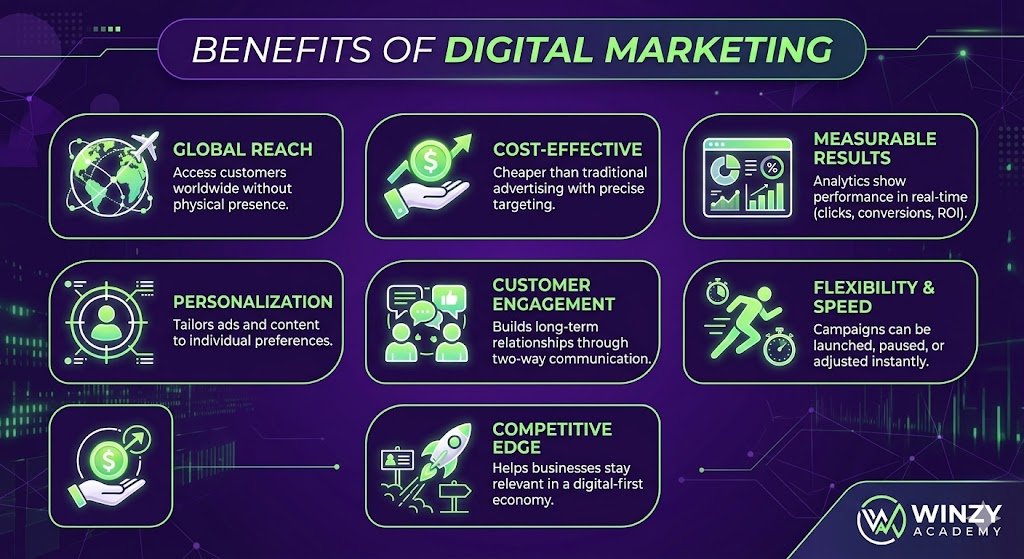
Benefits of Digital Marketing:
- Global Reach: Access customers worldwide without physical presence.
- Cost-Effective: Cheaper than traditional advertising with precise targeting.
- Measurable Results: Analytics show performance in real time.
- Personalization: Tailors ads and content to individual preferences.
- Customer Engagement: Builds long-term relationships through two-way communication.
- Flexibility & Speed: Campaigns can be launched, paused, or adjusted instantly.
- Competitive Edge: Helps businesses stay relevant in a digital-first economy.
“This is one of the important fields in what are top 7 courses list.”
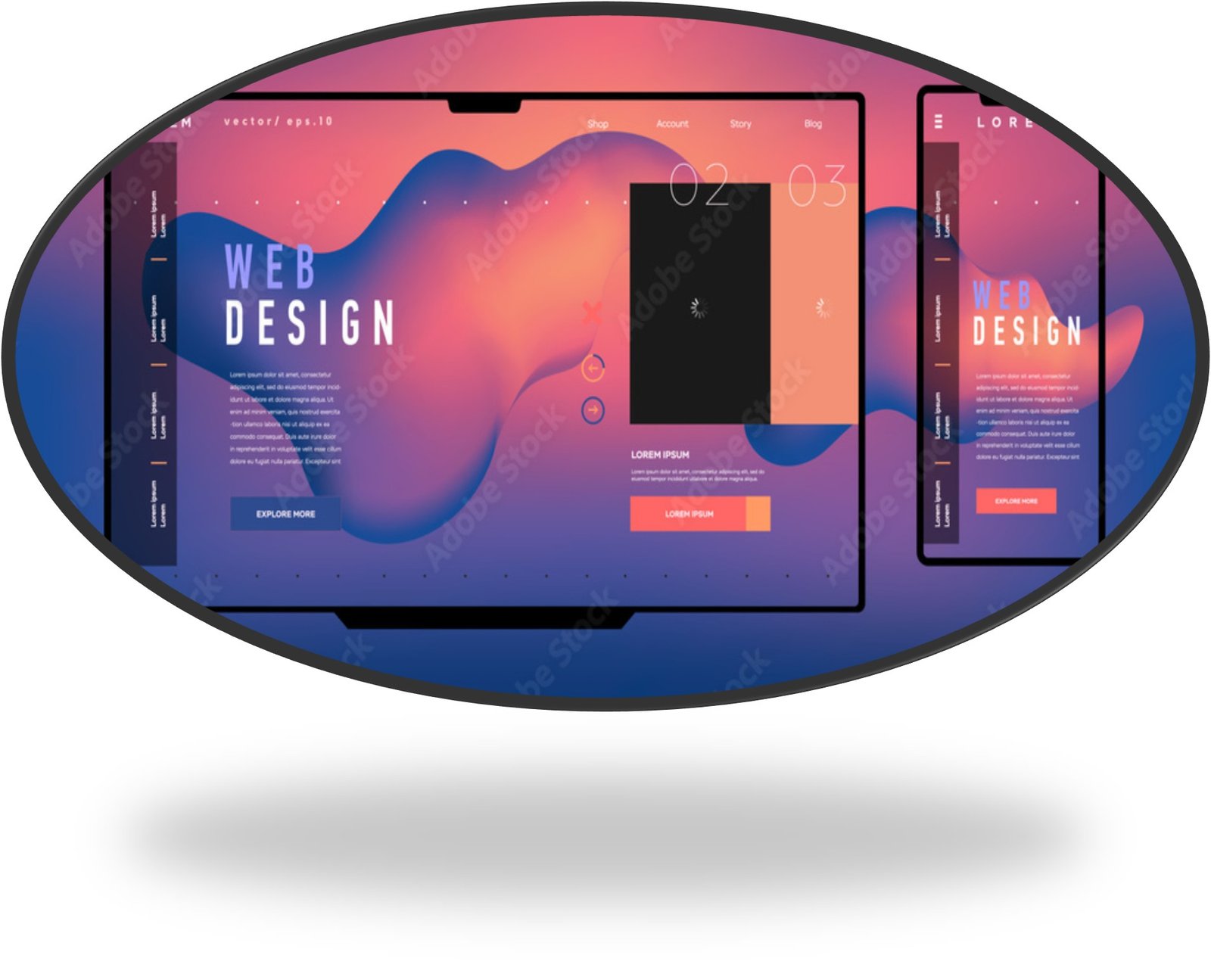
2.Web Designing:
Uses of Web Designing:
- Online Presence: Helps businesses, organizations, and individuals establish a professional identity on the internet.
- User Experience (UX): Ensures websites are easy to navigate, visually appealing, and responsive across devices.
- Brand Building: Reflects the brand’s style, values, and credibility through design elements.
- Information Sharing: Provides a platform to share content, products, services, or ideas with a global audience.
- Customer Engagement: Interactive features (forms, chatbots, multimedia) improve communication with visitors.
- SEO Optimization: Well-structured websites improve search engine ranking and visibility.
How Web Designing Works:
- Visual Design: Choosing colors, fonts, images, and graphics that reflect the brand identity.
- Content Integration: Adding text, images, videos, and interactive elements to communicate effectively.
- Front-End Development: Using HTML, CSS, and JavaScript to turn designs into interactive web pages.
- Testing & Optimization: Checking responsiveness (mobile, tablet, desktop), speed, and usability.
Benefits of Digital Marketing:
- Professional Online Presence – Builds credibility and trust.
- Better User Experience – Easy navigation and responsive design improve satisfaction.
- Brand Identity – Reflects the company’s values and style.
- Business Growth – Supports e-commerce, lead generation, and customer engagement.
- SEO-Friendly – Well-structured sites rank higher in search engines.
- Competitive Edge – A modern design helps stand out in the digital marketplace.
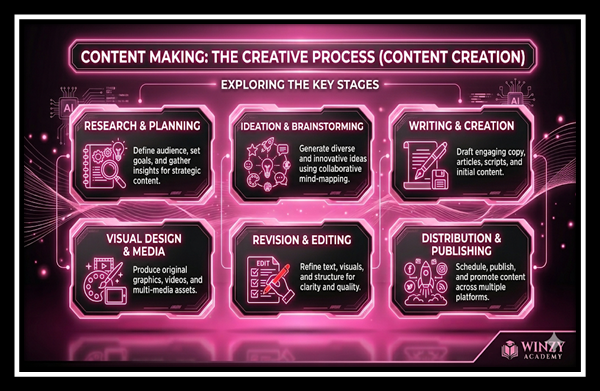
3.content making(content creation):
Uses of Content Creation:
- Information Sharing: Educates audiences about products, services, or topics.
- Brand Awareness: Builds visibility and recognition through consistent, valuable content.
- Customer Engagement: Encourages interaction via blogs, videos, and social media posts.
- Storytelling: Communicates brand values and connects emotionally with audiences.
- Education & Training: Provides tutorials, guides, and resources for learning.
- Entertainment: Engages audiences with creative formats like reels, memes, or podcasts.
How Content Creation Works:
- Research & Planning: Identify target audience, goals, and trending topics. Decide the type of content (blogs, videos, graphics, podcasts, social posts).
- Idea Generation: Brainstorm themes, titles, and formats that align with audience needs and brand goals.
- Content Production: Write articles, design visuals, record videos, or create social media posts. Use tools like Canva, Photoshop, Premiere Pro, or CMS platforms (WordPress).
- Optimization (SEO & Formatting): Add keywords, meta tags, and structure for search engine visibility. Ensure readability, mobile-friendliness, and accessibility.
Benefits of Content Creation:
- Cost-Effective Marketing: Organic content reduces reliance on paid ads.
- Global Reach: Content can be shared worldwide across digital platforms.
- Long-Term Value: Evergreen content continues to attract audiences over time.
4.SE0:
Uses of SEO:
- Improves Visibility: Helps websites appear higher in search engine results.
- Drives Organic Traffic: Attracts visitors without paid advertising.
- Builds Brand Awareness: Increases recognition by consistently appearing in searches.
- Supports Content Marketing: Optimized blogs, articles, and videos reach the right audience.
- Generates Leads & Sales: Converts visitors into customers through targeted keywords.
- Local Reach: Boosts visibility for nearby customers through local SEO.
How SEO Works:
- Keyword Research :Identify words and phrases people use to search for products or services.
- On-Page Optimization : Use keywords in titles, headings, meta descriptions, and content.
- Technical SEO : Improve site speed, mobile-friendliness, and ensure search engines can crawl and index pages.
- Content Creation :Publish high-quality, relevant blogs, articles, videos, or product descriptions.
- Link Building (Off-Page SEO) : Gain backlinks from other trusted websites to build authority.
- Local SEO (if applicable) :Optimize for local searches with Google Business Profile and location-based keywords.
- Analytics & Monitoring :Track performance using tools like Google Analytics and refine strategies.
Benefits of SEO:
- Cost-Effective: Reduces dependence on paid ads by driving free traffic.
- Long-Term Results: Once ranked, websites can maintain visibility for months
- Credibility & Trust: Higher rankings build authority and customer confidence.
- Scalability: Works for small businesses, startups, and large enterprises alike.
- Global & Local Reach: Expands audience worldwide while also targeting local customers.
5.Video Editing:
How It Works:
- Importing Footage: Raw clips, audio, and graphics are brought into editing software (e.g., Adobe Premiere Pro, Final Cut Pro, DaVinci Resolve).
- Organizing Timeline: Editors arrange clips in sequence to form a logical flow or narrative.
- Cutting & Trimming: Unwanted parts are removed, and transitions are added for smooth continuity.
- Adding Effects & Graphics: Visual effects, text overlays, animations, and filters enhance the video’s appeal.
- Audio Editing: Background music, sound effects, and voiceovers are synchronized with visuals.
- Color Correction & Grading: Adjusting brightness, contrast, and colors to achieve a professional look.
- Exporting Final Video: The edited video is rendered into formats suitable for platforms like YouTube, Instagram, or broadcast.
Uses of Video Editing:
- Content Polishing: transforms raw footage into professional, engaging videos.
- Marketing & Advertising: Creates promotional videos, product demos, and brand campaigns.
- Education & Training: Produces tutorials, lectures, and e-learning materials.
- Social Media Engagement: Optimizes content for platforms like YouTube, Instagram, and TikTok.
Benefits of Video Editing:
- Professional Quality: Makes videos visually appealing and polished.
- Audience Engagement: Keeps viewers interested with smooth transitions and creative effects.
- Brand Building: Strengthens identity through consistent style and visuals.
- Emotional Impact: Enhances storytelling with music, pacing, and visuals.

6.Graphics design:
Uses for Graphics design:
- Brand Identity: Creates logos, color schemes, and visual styles that represent a company’s personality.
- Marketing & Advertising: Designs posters, brochures, social media graphics, and digital ads to attract customers.
- Web & App Design: Enhances user experience with appealing layouts, icons, and visuals.
- Product Packaging: Makes products stand out on shelves with creative and informative designs.
- Education & Training: Simplifies complex ideas through infographics, charts, and visual aids.
- Social Media Engagement: Boosts interaction with eye-catching posts, reels, and stories.
How It Works :
- Concept Development: Ideas are sketched or drafted to visualize the message.
- Design Creation: Using tools like Adobe Photoshop, Illustrator, Canva, or CorelDRAW, designers combine typography, imagery, and colors into layouts.
- Application of Design Principles: Balance, contrast, alignment, repetition, and hierarchy are applied to make the design visually appealing and clear.
- Final Output: The finished design is exported for print, digital platforms, or multimedia use.
Benefits of Graphic Design:
- Effective Communication: Simplifies complex ideas into clear, engaging visuals.
- Professional Appeal: Makes businesses and products look credible and trustworthy.
- Customer Engagement: Attracts attention and encourages interaction.
- Versatility: Useful in marketing, advertising, education, entertainment, and digital media.
7.Artificial Intelligence (AI):
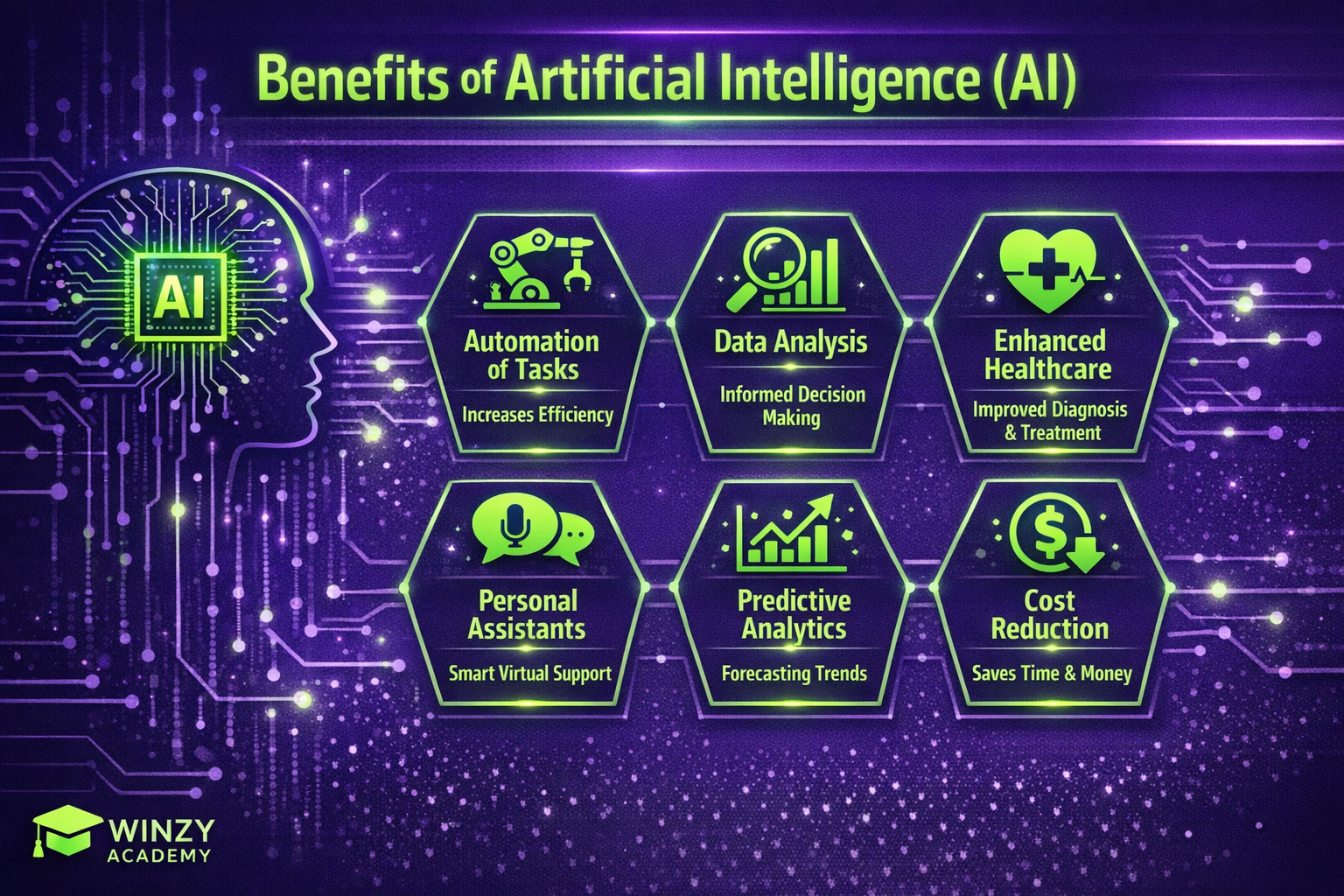
Uses of AI:
- Automation: Handles repetitive tasks in customer service, banking, and manufacturing (e.g., chatbots, robotic process automation).
- Data Analysis: Processes massive datasets to identify trends, crucial in finance, healthcare, and marketing.
- Healthcare: Supports diagnostics, medical imaging, and drug discovery; enables personalized treatment plans.
- Transportation: Powers self-driving cars, predictive maintenance, and smart traffic systems.
- Education: Provides adaptive learning platforms, personalized tutoring, and automated grading.
- Entertainment: Recommends movies/music (Netflix, YouTube) and assists in video editing or content creation.
How AI Works :
1.Data Collection & Preprocessing:
- AI systems start by gathering large amounts of data (text, images, videos, sensor readings).
- Data is cleaned, standardized, and prepared for analysis.
2.Data Splitting:
- The dataset is divided into training data (to teach the model) and testing data (to evaluate accuracy).
3.Model Selection:
- Neural networks for image recognition.
- Decision trees for classification.
- Natural Language Processing (NLP) for text and speech.
4.Model Training:
- The AI learns patterns by adjusting internal parameters (weights).
- Example: A video editor AI learns to detect scene changes by analyzing thousands of clips.
5.Monitoring & Maintenance:
- AI systems are continuously updated with new data to stay accurate and relevant.
Benefits of AI:
- Cost Savings: Minimizes errors and optimizes operations, lowering expenses.
- Personalization: Customizes shopping, learning, and entertainment experiences.
- Innovation: Enables new products, services, and business models.
- Better Decision-Making: Provides data-driven insights for strategic planning.
- Accessibility: Voice recognition and AI-driven tools help people with disabilities.
- Scalability: Manages large-scale operations without proportional cost increases.
conclusion:
- In today’s fast-paced digital era, choosing the right skill is the first step toward a successful and future-proof career. Whether you are drawn to the technical precision of Web Designing and SEO, the creative storytelling of Video Editing and Content Creation, or the innovative frontiers of Artificial Intelligence, each of these seven courses offers a unique pathway to professional growth.
- “Hope this guide on what are top 7 courses helped you to make a decision.” By mastering these high-demand skills, you not only enhance your employability but also gain the tools to thrive in a global, digital-first economy. The key is to align your interests with market needs—transforming your passion into a powerhouse of expertise that drives innovation and business success.
For more detail
visit us:
Winzy Academy | Web Design Course | Digital Marketing Course | Winzy Infotech
call us:+919790905152
