



Advantages and Disadvantages of Dynamic Websites: Complete 2026 Guide
April 21, 2026
Top 7 Courses for High-Paying Jobs in 2026
April 21, 2026How to SEO for dynamic pages
Best SEO for dynamic pages

Use SEO-Friendly URLs
How to SEO for dynamic pages SEO-friendly URLs are clean, simple, and easy to read for both users and search engines. Instead of using random numbers or symbols, use meaningful words related to your content. This helps search engines understand your page topic and improves ranking.
Unique Meta Tags for Each Page
Every page on your website should have its own unique meta title and meta description. These tags tell search engines what your page is about and appear in search results. If all pages have the same meta tags, search engines get confused, and your SEO performance drops.
Use Dynamic Keywords
Dynamic keywords mean using relevant and trending keywords based on user search behavior. Instead of repeating the same keyword everywhere, include variations and long-tail keywords naturally in your content. This improves your chances of ranking for multiple search queries.
Optimize Page Speed
Page speed is very important for SEO and user experience. If your website loads slowly, visitors may leave quickly, increasing bounce rate. To improve speed, compress images, reduce unnecessary code, and use fast hosting. Faster websites rank better on search engines.
Internal Linking
Internal linking means connecting one page of your website to another page within the same site. This helps users navigate easily and also helps search engines crawl your website better. It increases the time users spend on your site and boosts SEO.
Add Structured Content
Structured content means organizing your content properly using headings (H1, H2, H3), bullet points, and clear sections. This makes your content easy to read and understand. Search engines also prefer well-structured content because it helps them analyze your page better.
Sitemap & Indexing
A sitemap is a file that lists all the pages on your website and helps search engines find them easily. Indexing means getting your pages stored in search engine databases like Google. Submitting your sitemap ensures your pages are discovered and ranked faster.
DIGITAL MARKETING

- digital marketing How to SEO for dynamic pages Digital marketing is an important strategy for businesses to grow online through dynamic platforms .It allows websites to display updated content automatically based on user interaction and database information. With proper SEO optimization, dynamic digital marketing pages can rank higher onsearch engines and attract more visitors.
- Businesses can use this method to provide personalized content and improve user experience. Engagement in digital marketing dynamic pages depends on how well the content is structured and delivered to users. When users find relevant and updated information, they are more likely to stay longer on the page.
- Dynamic content such as updated blogs, trending topics, and personalized suggestions helps improve user interaction and website performance. Digital marketing services for dynamic websites include SEO optimization, content updates, and performance improvement.
- These services ensure that each page has unique content and proper keyword usage.By implementing advanced SEO strategies, businesses can increase their visibility and achieve better online growth, How to SEO for dynamic pages
SEO
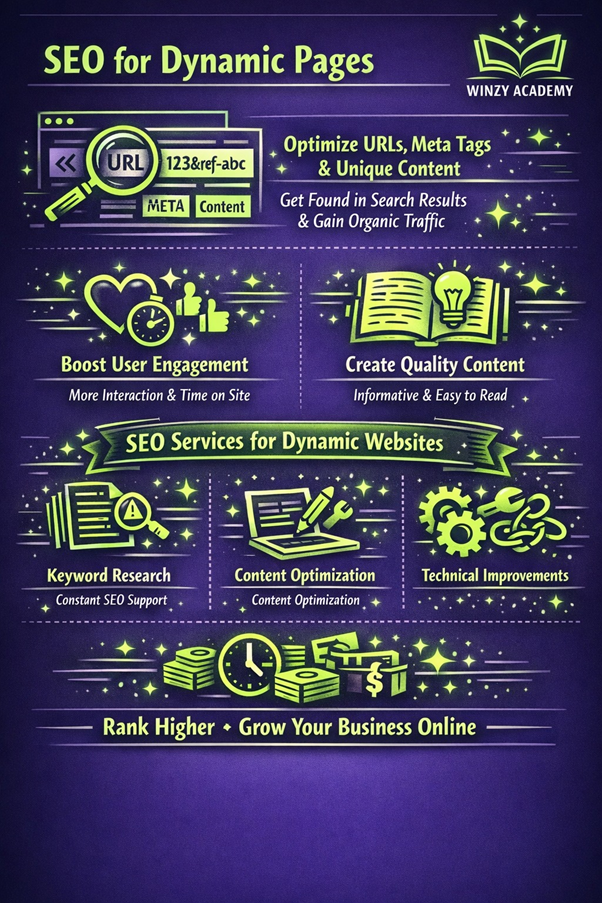
- Search engine optimization for dynamic pages focuses on improving the visibility of automatically generated content. It involves optimizing URLs, adding meta tags, and ensuring that each page has unique and relevant content. SEO helps dynamic pages appear in search results and attract organic traffic.
- User engagement plays a major role in SEO success for dynamic pages. When users spend more time on a page and interact with the content, search engines consider it valuable. Creating informative and easy-to-read content helps improve engagement and ranking SEO services for dynamic websites include keyword research, content optimization, digital marketing and technical improvements. How to SEO for dynamic pages
WEB DEVELOPMENT
Best SEO for dynamic pages in Trichy
Best SEO for dynamic pages in Trichy
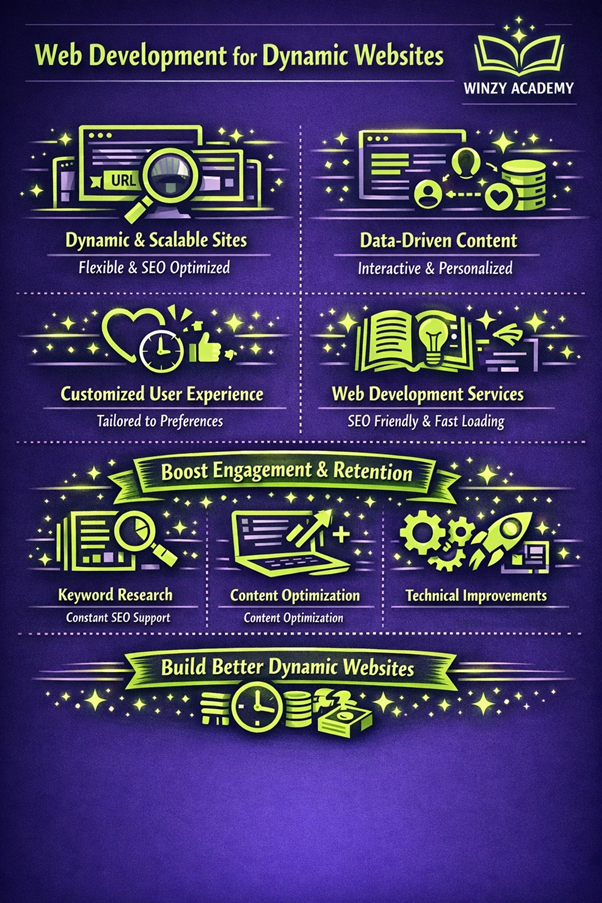
- Web development for dynamic websites involves creating pages that change content based on user data and database inputs. These websites are more flexible and scalable compared to static websites. Proper development ensures better performance and SEO optimization.
- Dynamic web development improves user engagement by providing personalized and interactive content.
- Users can experience customized pages based on their preferences, which increases satisfaction and retention.
- Web development services include building dynamic websites with SEO-friendly structures. These services ensure fast loading speed.
Advantages of SEO for Dynamic Pages
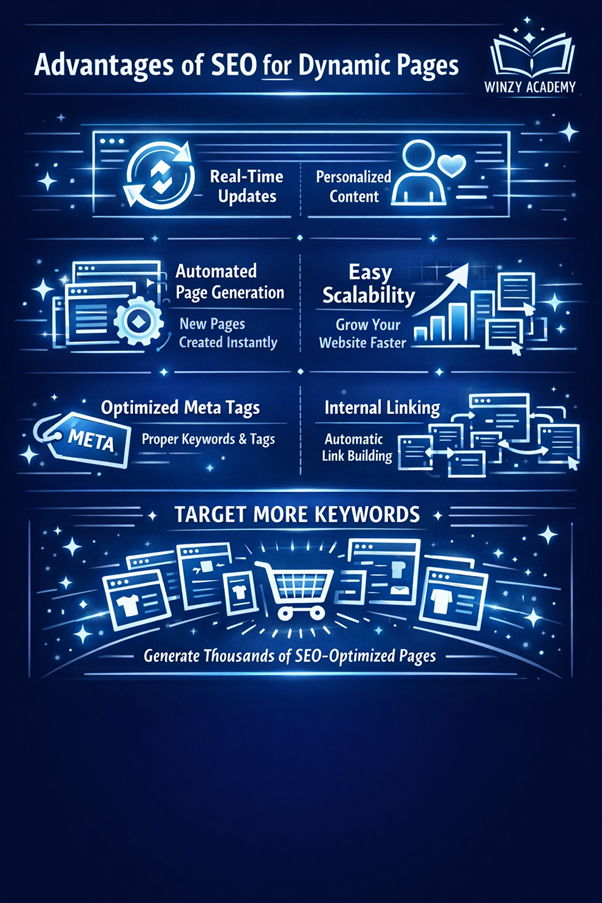
- Another advantage is that content can be updated in real time, which keeps the website fresh and relevant.
- Search engines prefer updated content, so this improves ranking.
- Dynamic pages also allow personalization, where users see content based on their interests, which increases engagement and time spent on the website.
- Dynamic SEO also saves time and effort because once the system is set up, new pages are generated automatically with proper structure, meta tags, and keywords.
- This makes it easier for businesses to scale their website and grow faster online.
- Internal linking can also be automated, helping search engines crawl pages more efficiently.
- Overall, dynamic SEO is powerful for large websites that need continuous content updates and wide keyword coverage.
- Dynamic pages give a big advantage because they can automatically generate a large number of pages based on database content.
- This means a website can target many keywords without creating each page manually.
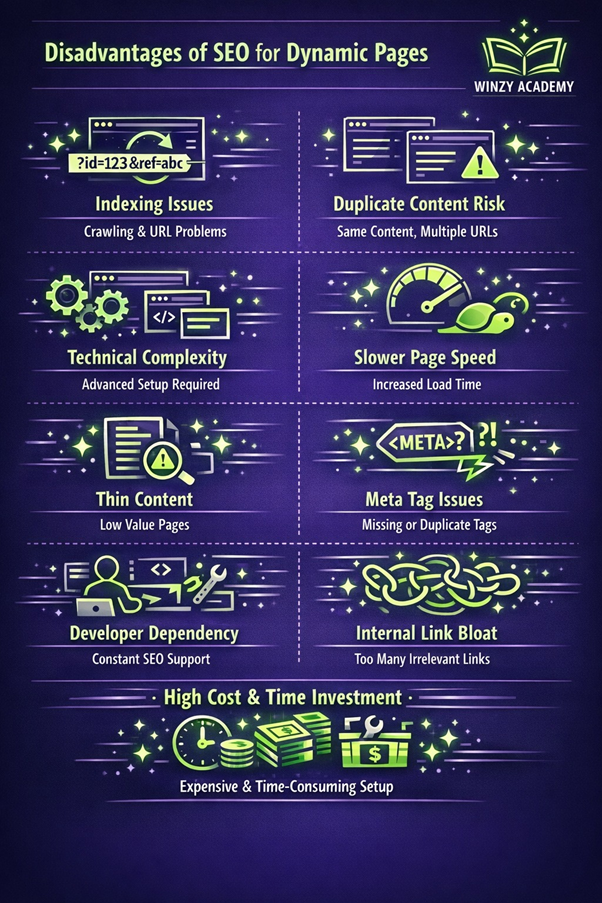
Disadvantages of SEO for Dynamic Pages Indexing Issues
Are dynamic page good for SEO in 2026
Duplicate Content Risk
Dynamic pages can auto-generate multiple URLs with same or very similar content. This confuses search engines and dilutes ranking power.
Technical Complexity
Setting up dynamic SEO needs strong technical knowledge. URL rewriting, canonical tags, sitemap automation – if done wrong, it hurts SEO instead of helping.
Slower Page Speed
Dynamic pages pull data from databases in real time. Without caching or optimization, load time increases. Slow pages rank lower and lose users.
Thin Content Problem
Auto-generated pages often have very little unique text. Example: 10,000 product pages with only price & title changed. Google may see them as “low value” and not rank them.
Harder to Control Meta Tags
If the system is not set properly, many pages end up with duplicate or missing title tags and meta descriptions, which is bad for SEO
Internal Link Bloat
Automated internal linking can create thousands of irrelevant links. This wastes crawl budget and passes less authority to important pages. Initial Setup Cost & Time: Building a proper dynamic SEO system takes more time and money upfront compared to basic WordPress/Static SEO.
conclution
How to SEO for dynamic pages SEO for Dynamic pages are a game-changer for websites that need scale, personalization, and automation. When combined with proper SEO, they can drive massive organic growth that static sites cannot match.
For more detail
visit us:
Winzy Academy | Web Design Course | Digital Marketing Course | Winzy Infotech
call us:+9790905152
