



Which Is the Best 3 Month Course for Jobs in 2026?
April 20, 2026
Best Courses for 100% Placement and High Salary Jobs in 2026
April 20, 2026
What is the 3-3-3 Rule in Marketing
333rule marketing
- In the fast-evolving world of marketing, where consumer attention spans are continuously shrinking and competition is increasing, businesses need simple yet powerful strategies to communicate their message effectively.
- One such concept that has gained attention in recent years is the 3-3-3 rule in marketing, which focuses on delivering clear, concise, and impactful communication within a limited time frame.
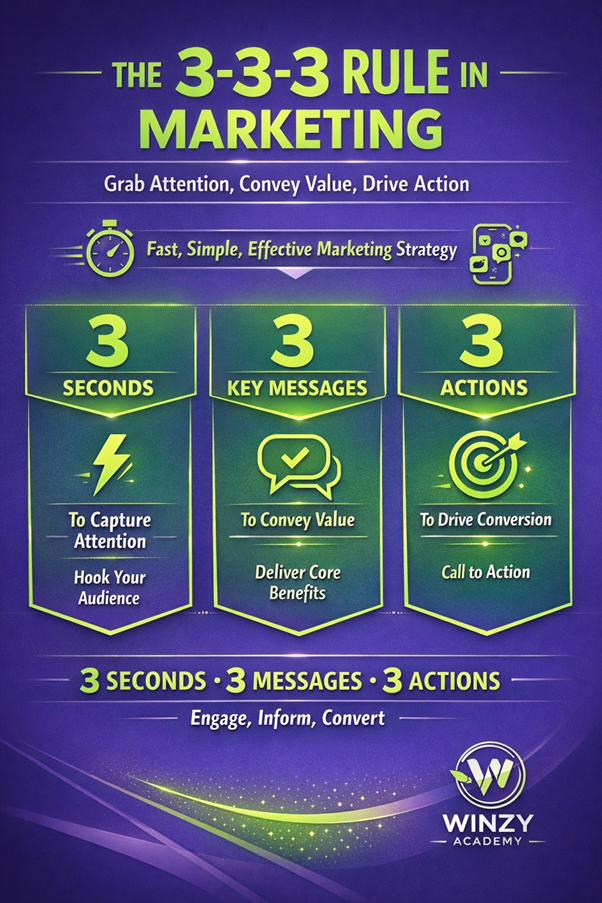
- The rule is based on the idea that a brand has only a few seconds to capture attention, a few key messages to convey value, and a few opportunities to convert a potential customer into a loyal one.
- In an era dominated by digital platforms, social media, and mobile usage, users tend to scroll quickly and make instant decisions, making it essential for marketers to adopt strategies that are both efficient and engaging.
- The 3-3-3 rule simplifies marketing communication by breaking it into manageable parts, allowing businesses to create content that is easy to understand, memorable, and action-oriented.
- This concept is especially useful for digital marketing, advertising campaigns, presentations, and content creation, where clarity and speed are critical for success.
Understanding the 3-3-3 Rule in Marketing
best 3 3 3 rules of marketing
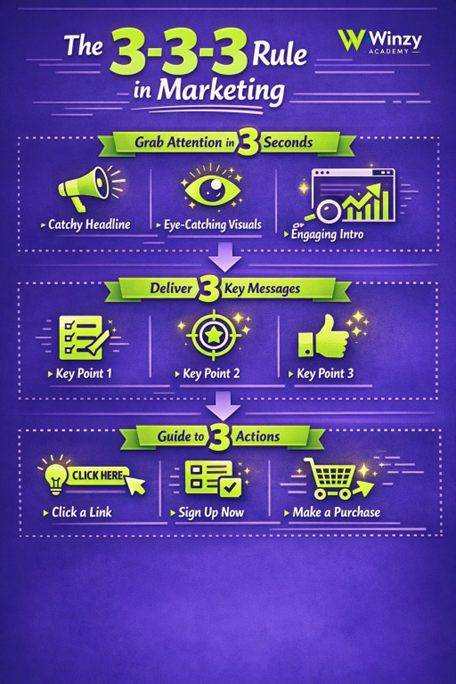
- The 3-3-3 rule in marketing can be interpreted in different ways depending on the context, but it generally revolves around three key principles: capturing attention within the first 3 seconds, delivering 3 key messages, and guiding the audience toward 3 possible actions or outcomes.
- The first “3” emphasizes the importance of grabbing the audience’s attention almost instantly, as modern consumers decide within seconds whether they are interested in a piece of content.
- This can be achieved through compelling headlines, eye-catching visuals, or engaging opening lines.
- The second “3” focuses on limiting the message to three main points, ensuring that the content remains clear and not overwhelming.
- Overloading users with too much information can lead to confusion and disengagement, so highlighting only the most important benefits or features is crucial.
- The final “3” relates to providing clear and simple actions for the audience, such as clicking a link, signing up, or making a purchase.
- By structuring content in this way, marketers can create a streamlined and effective communication process that aligns with consumer behavior.
Best Practices for Using the 3-3-3 Rule
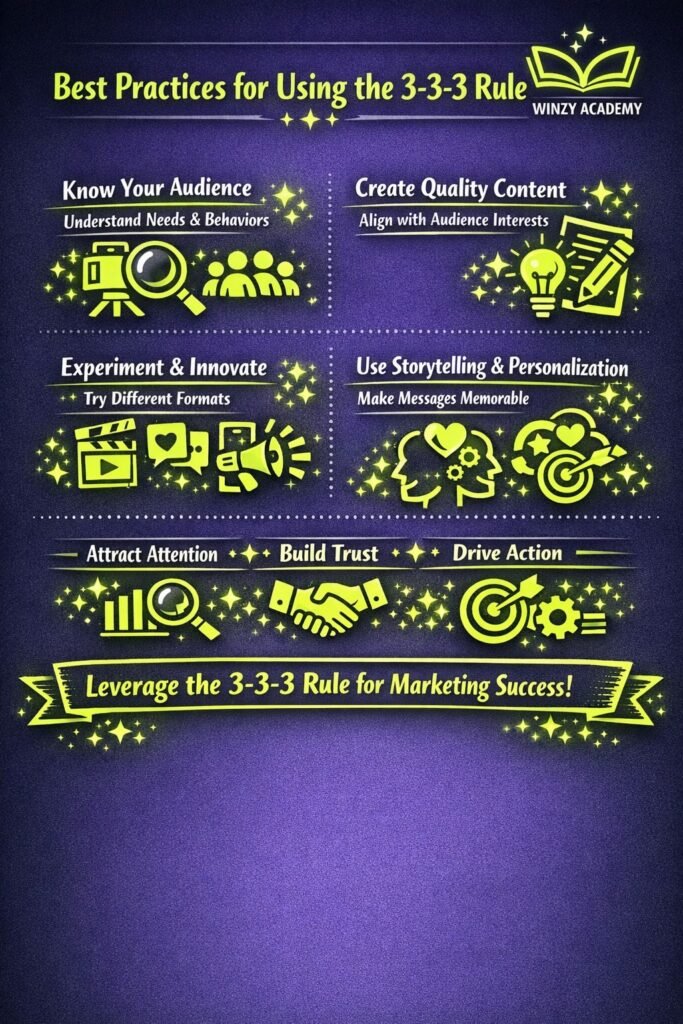
- To maximize the effectiveness of the 3-3-3 rule, marketers should focus on creating high-quality content that aligns with the needs and preferences of their target audience.
- It is important to invest time in understanding customer behavior and identifying the key messages that will resonate with them.
- Marketers should also experiment with different formats and styles to keep their content fresh and engaging.Combining the 3-3-3 rule with other marketing strategies, such as storytelling and personalization, can further enhance its impact.
- Additionally, it is essential to analyze performance metrics and make adjustments based on the results, ensuring continuous improvement.
- By following these best practices, businesses can leverage the 3-3-3 rule to create effective and impactful marketing campaigns.
How the 3-3-3 Rule is Used in Marketing
- The 3-3-3 rule is widely applicable across various marketing channels and strategies, making it a versatile tool for businesses.
- In social media marketing, for example, the first 3 seconds are critical for stopping users from scrolling, which is why marketers use bold visuals, short videos, or intriguing captions to capture attention.
- Once the audience is engaged, the content should present three key points, such as the main benefits of a product or service, to maintain clarity and focus.
- Finally, a clear call-to-action is provided, encouraging users to take the next step.
- In email marketing, the subject line plays the role of the first 3 seconds, determining whether the email will be opened or ignored.
- The body of the email then highlights three main messages, followed by a call-to-action such as clicking a link or making a purchase.
- Similarly, in website design and landing pages, the 3-3-3 rule helps in structuring content so that visitors can quickly understand the value proposition and decide whether to stay or leave.
- This approach not only improves user experience but also increases conversion rates by guiding users through a simple and logical process.
Applications of the 3-3-3 Rule in Different Areas
- The 3-3-3 rule is not limited to digital marketing alone; it can also be applied in traditional marketing, presentations, and branding strategies.
- In advertising, marketers use the rule to create short and impactful ads that deliver a clear message within a few seconds.
- In presentations, speakers often structure their content around three main points to make it easier for the audience to follow and remember.
- In branding, companies focus on three core values or unique selling points to differentiate themselves from competitors.
- The rule is also useful in content marketing, where blog posts, videos, and infographics are designed to capture attention quickly, deliver concise information, and encourage engagement.
- By applying the 3-3-3 rule across different areas, businesses can maintain consistency in their communication and ensure that their message is both effective and memorable.
Advantages of the 3-3-3 Rule in Marketing
- One of the main advantages of the 3-3-3 rule is its simplicity, which makes it easy to understand and implement across various marketing strategies.
- By focusing on just three key elements at each stage, marketers can avoid overcomplicating their message and ensure that it is clear and concise.
- This approach is particularly effective in today’s fast-paced digital environment, where users have limited attention spans and prefer quick, easily digestible content.
- Another advantage is improved audience engagement, as content that follows the 3-3-3 rule is more likely to capture attention and hold interest.
- The rule also enhances memory retention, as people tend to remember information presented in smaller, structured groups.
- Additionally, it helps in increasing conversion rates by guiding users toward clear and specific actions.
- The 3-3-3 rule also saves time and resources, as it encourages marketers to focus only on the most important aspects of their message, reducing unnecessary effort and complexity.
- Overall, the rule provides a practical framework for creating effective marketing content that resonates with the audience.
What is the 3-3-3 Rule in Marketing
Are dynamic page good for SEO in 2026
- It is important to invest time in understanding customer behavior and identifying the key messages that will resonate with them.
- Marketers should also experiment with different formats and styles to keep their content fresh and engaging.
- Combining the 3-3-3 rule with other marketing strategies, such as storytelling and personalization, can further enhance its impact.
- Additionally, it is essential to analyze performance metrics and make adjustments based on the results, ensuring continuous improvement.
- By following these best practices, businesses can leverage the 3-3-3 rule to create effective and impactful marketing campaigns.
Conclusion
The 3-3-3 rule in marketing is a powerful yet simple framework that helps businesses communicate effectively in a crowded digital space. By capturing attention quickly, delivering clear messages, and guiding users toward action, marketers can create impactful campaigns that drive real results.
For more detail
visit us:
Winzy Academy | Web Design Course | Digital Marketing Course | Winzy Infotech
call us:+9790905152
