

How to Rank Website on Google First Page (2026)
April 20, 2026
Best 3-3-3 Rule in Marketing in SEO
April 20, 2026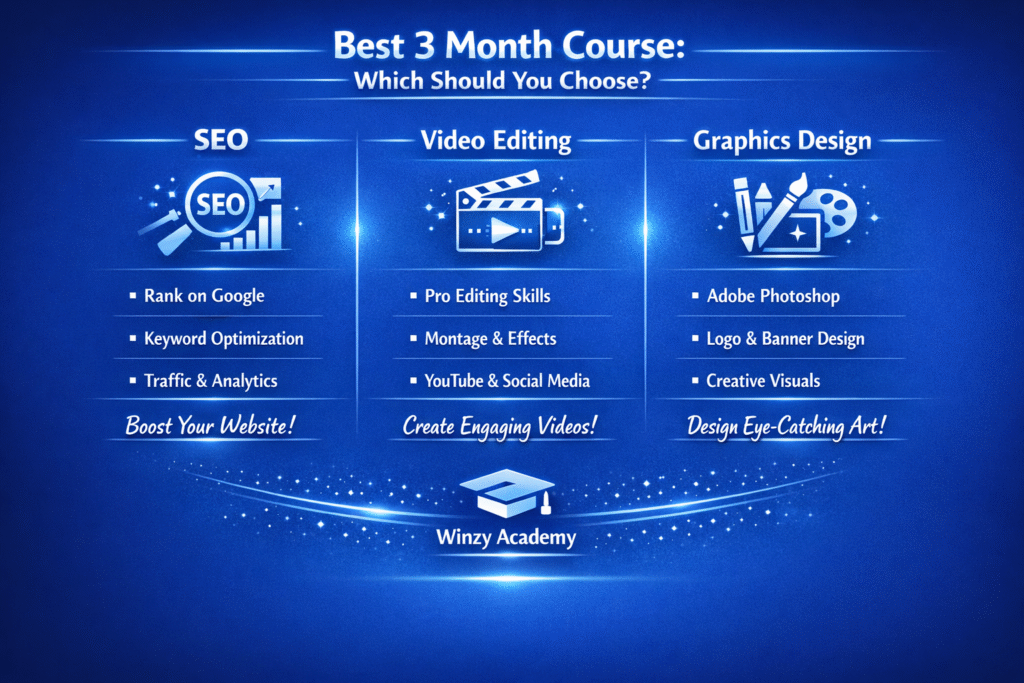
Which is the best 3 month course:
Best 3 Months Courses in Trichy
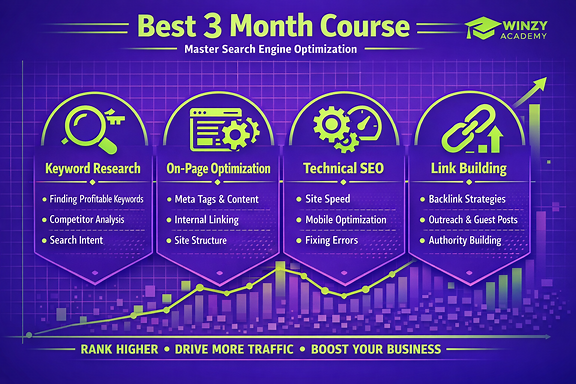
1.SEO:
Main Uses of SEO:
- Increase Website Traffic: By ranking higher in search results, you get more visitors.
- Build Credibility & Trust: People trust sites that appear at the top of search results.
- Cost-Effective Marketing: Unlike ads, SEO brings long-term traffic without continuous spending.
- Better User Experience: SEO improves site speed, mobile-friendliness, and navigation.
- Competitive Advantage: Helps small businesses compete with larger ones online.
- Local Reach: Local SEO ensures your business shows up in “near me” searches.
- winzyacademy.com
How SEO Works:
- Keyword Optimization: Using relevant search terms in titles, headings, and content.
- Content Quality: Publishing useful, original, and engaging material.
- Technical SEO: Improving site speed, mobile-friendliness, and crawlability.
- Link Building: Getting other reputable sites to link to your content.
- User Experience: Ensuring easy navigation and clear structure.
Specialized Types of SEO:
- Video SEO: Improves visibility of video content on platforms like YouTube.
- Image SEO: Optimizes images with alt text, compression, and proper filenames.
On-Page:
SEO focuses on optimizing elements within your website, such as keywords, meta descriptions, headings, and content quality, to make it more relevant to search queries.
Off-Page :
deals with external factors like backlinks, social media signals, and brand mentions, which help build authority and trust in the eyes of search engines
Technical :
ensures that your site is easy for search engines to crawl and index by improving aspects like site speed, mobile-friendliness, secure connections (HTTPS), and structured data.
Local :
which helps businesses appear in location-based searches (like “restaurants near me”).
2.Video Editing:
Uses of Video Editing:
- Storytelling: Shapes raw footage into a clear narrative for films, ads, or social media.
- Marketing: Creates promotional videos, product demos, and ads that attract customers.
- Social Media: Short-form videos (Instagram Reels, YouTube Shorts, TikTok) rely heavily on editing for impact.
- Corporate Communication: Used in presentations, training modules, and internal communications.
Who Can Use Video Editing:
- Digital Marketers: To create ads, product demos, and social media campaigns.
- Content Creators: YouTubers, vloggers, and influencers use editing to make videos engaging.
- Entertainment Industry: Filmmakers, music producers, and game developers rely on editing for storytelling.
- Event Planners: Wedding videos, highlight reels, and personal event recordings.
- Social Media Users: Everyday people use simple editing apps to make reels, Tik Toks, or short clips.
Benefits of Video Editing:
- Professional Quality: Makes videos look polished with smooth transitions, effects, and clear audio.
- Better Storytelling: Shapes clips into a clear narrative that captures attention and emotion.
- Increased Engagement: Edited videos hold viewers’ interest longer, especially on social media.
- Brand Building: Consistent style and quality strengthen a business’s identity and credibility.
- Versatility: Useful for marketing, education, entertainment, and personal projects.
- Higher Reach: Well-edited videos are more likely to be shared, boosting visibility and audience growth.
- Time Efficiency: Removes unnecessary parts, keeping content concise and impactful.
3.Graphics design:
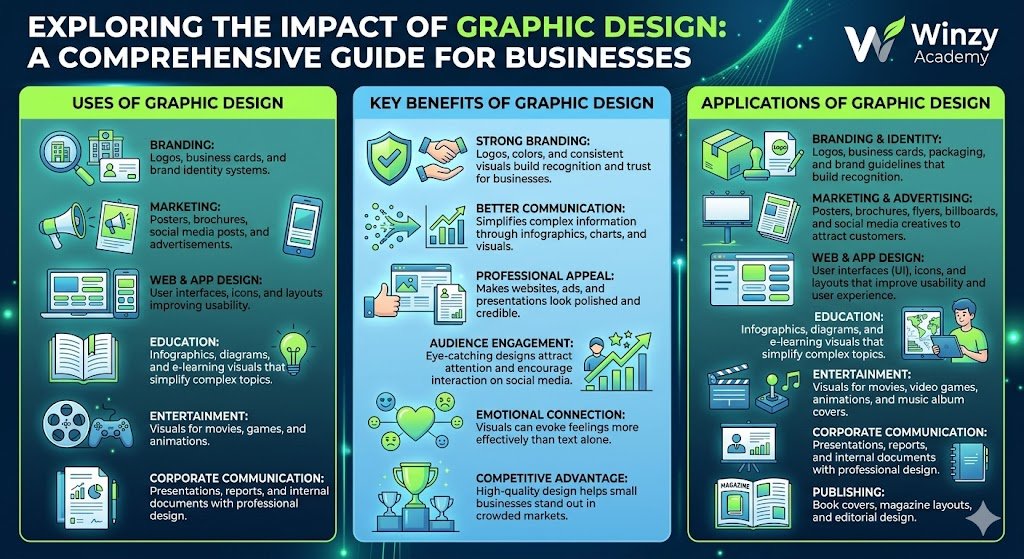
Uses of Graphic Design:
- Branding: Logos, business cards, and brand identity systems.
- Marketing: Posters, brochures, social media posts, and advertisements.
- Web & App Design: User interfaces, icons, and layouts that improve usability.
- Education: Infographics, diagrams, and e-learning visuals to simplify complex topics.
- Entertainment: Visuals for movies, games, and animations.
- Corporate Communication: Presentations, reports, and internal documents with professional design.
Key Benefits of Graphic Design:
- Strong Branding: Logos, colors, and consistent visuals build recognition and trust for businesses.
- Better Communication: Simplifies complex information through infographics, charts, and visuals.
- Professional Appeal: Makes websites, ads, and presentations look polished and credible.
- Audience Engagement: Eye-catching designs attract attention and encourage interaction on social media.
- Emotional Connection: Visuals can evoke feelings more effectively than text alone.
- Competitive Advantage: High-quality design helps small businesses stand out in crowded markets.
Applications of Graphic Design:
- Branding & Identity: Logos, business cards, packaging, and brand guidelines that build recognition.
- Marketing & Advertising: Posters, brochures, flyers, billboards, and social media creatives to attract customers.
- Web & App Design: User interfaces (UI), icons, and layouts that improve usability and user experience.
- Education: Infographics, diagrams, and e-learning visuals that simplify complex topics.
- Entertainment: Visuals for movies, video games, animations, and music album covers.
- Corporate Communication: Presentations, reports, and internal documents with professional design.
- Publishing: Book covers, magazine layouts, and editorial design.
Conclusion:
- Which is the best 3 month course, In the competitive landscape of 2026, choosing a short-term skill is one of the smartest ways to fast-track your career. Whether you are interested in the technical mastery of SEO, the creative storytelling of Video Editing, or the visual impact of Graphic Design, each of these three courses offers a direct path to high-demand jobs.
- By investing just three months in focused training, you can transform from a beginner into a professional capable of helping businesses grow in the digital world. The right choice depends on your passion—if you love data and strategy, Which is the best 3 month course, go for SEO; if you love visuals, Graphic Design is for you; and if you want to rule social media, Video Editing is the key.
for more details
visit us:
Winzy Academy | Web Design Course | Digital Marketing Course | Winzy Infotech
call us:+919790905152
